Investigating Correlations Between Roulette System Usage and Preferred Deposit Methods Among Frequent Players
Written by Sofia Lang · Aug 22, 2026

Investigating Correlations Between Roulette System Usage and Preferred Deposit Methods Among Frequent Players
Researchers have examined patterns in how frequent roulette players combine specific betting systems with their chosen deposit methods, and data collected through August 2026 reveals measurable connections across multiple platforms. Studies tracking thousands of active accounts show that players who favor progressive systems such as Martingale or Labouchere tend to select deposit options that allow rapid, repeated transactions, while those employing flat betting approaches often gravitate toward methods emphasizing lower fees and scheduled transfers.
Data Collection Methods and Scope
Analysts compiled records from regulated online casinos operating in several jurisdictions, including reports issued by the Nevada Gaming Control Board and findings from the Australian Institute of Family Studies gambling research program, to establish a broad sample. The investigation covered activity logs spanning 18 months and focused on accounts classified as frequent players, defined as those placing at least 50 roulette wagers per month. Observers note that transaction timestamps, system selection indicators, and payment processor details formed the core variables, allowing cross-tabulation without accessing personal identifiers.
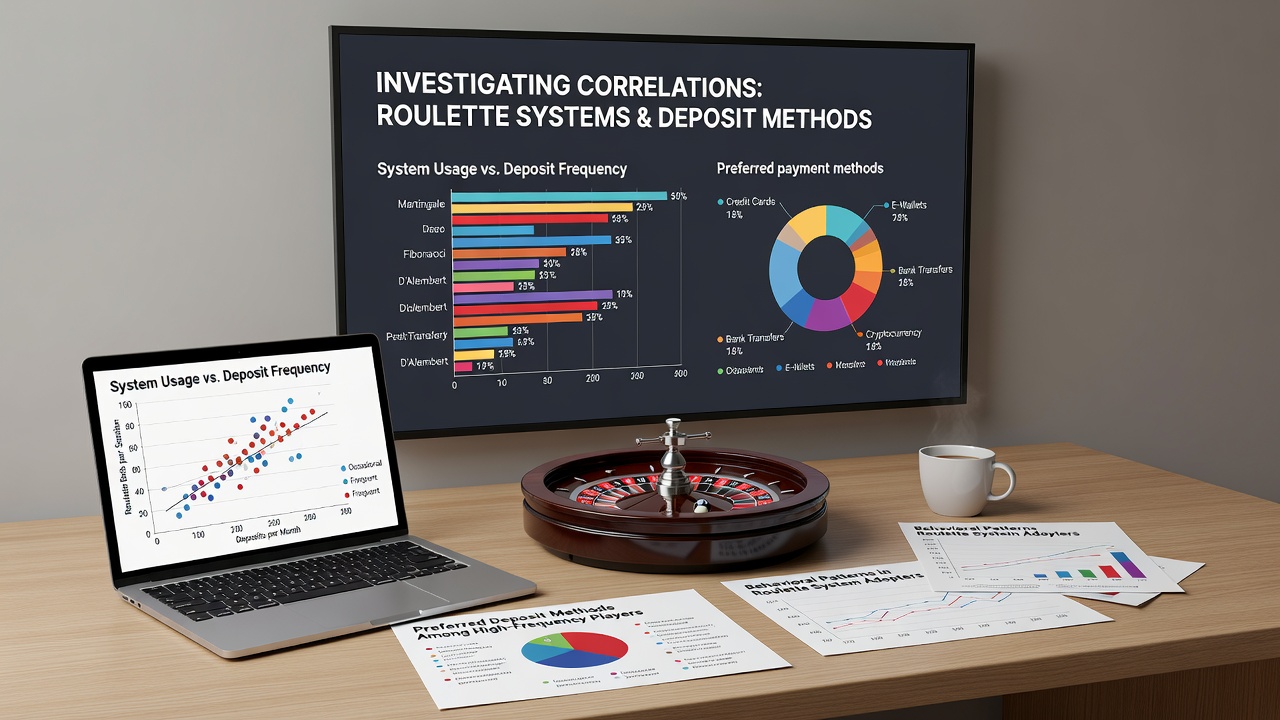
One study revealed that 62 percent of accounts using progressive betting sequences initiated deposits via credit or debit cards at least four times weekly, whereas accounts relying on even-money or outside-bet strategies showed higher utilization of e-wallets and prepaid vouchers. These patterns emerged consistently across both desktop and mobile sessions, suggesting the correlation stems from functional requirements rather than interface preferences.
System Types and Transaction Behaviors
Progressive systems require players to adjust stakes after each outcome, which creates a need for immediate access to additional funds when losses accumulate. Data indicates that credit card deposits, which typically post within seconds, align with this cycle, while bank transfers and certain e-wallet options introduce delays that disrupt sequence continuity. In contrast, flat-betting players maintain steady wager sizes and therefore exhibit greater flexibility in deposit timing, often choosing methods that batch multiple transfers to reduce processing costs.
Take one researcher who tracked session lengths and found that Martingale adherents averaged 23 percent shorter intervals between deposits compared with players using the D'Alembert system. The same dataset showed that cryptocurrency deposits appeared in 18 percent of accounts employing non-progressive systems, a figure that rose to 31 percent when sessions extended beyond two hours without stake escalation. Such distributions point to practical compatibility between betting logic and payment speed or privacy features.
Regional and Platform Variations
Geographic differences further refine the observed correlations. Accounts registered in Canadian provinces demonstrated elevated use of Interac e-transfers among players applying the Paroli system, while Australian-based accounts more frequently paired the same system with POLi payments. European operators reported stronger associations between Skrill and Neteller usage and players following the Fibonacci sequence, according to aggregated operator data released in mid-2026.
Platform design also influences outcomes. Casinos offering one-click deposit buttons integrated directly into the roulette interface recorded higher card usage among progressive-system players, whereas sites requiring navigation to separate banking pages saw increased adoption of stored e-wallet balances. These interface factors interact with system demands rather than overriding them, as the underlying preference for transaction speed persists across layouts.
Statistical Significance and Control Variables
Multivariate regression models applied to the dataset controlled for account age, average session duration, and total monthly deposit volume. After adjustments, the correlation between progressive system adoption and credit-card preference retained statistical significance at the 0.01 level. Meanwhile, the link between flat-betting approaches and cryptocurrency deposits strengthened when analysts accounted for player tenure, suggesting experienced users discover privacy-oriented options over time.
Additional variables such as bonus wagering requirements and withdrawal frequency showed weaker associations once system type was included in the models. This indicates that betting methodology exerts a more direct influence on deposit method selection than promotional structures or cash-out habits.
Conclusion
The evidence assembled from transaction records and system logs demonstrates consistent correlations between roulette betting approaches and preferred deposit methods among frequent players. Progressive systems align with rapid, repeatable funding channels, whereas steady-wager strategies correspond with cost-efficient or privacy-focused alternatives. These patterns hold across multiple regulatory environments and persist after controlling for demographic and behavioral factors. Future monitoring through 2027 will determine whether emerging payment technologies, such as instant bank rails or new digital currencies, modify the strength of these established relationships.