Shifts in Wheel Bias Detection Methods Among Players Adapting to Crypto-Enabled Multi-Ball Formats at Emerging Sites
Written by Jordan Foster · Sep 17, 2026

Shifts in Wheel Bias Detection Methods Among Players Adapting to Crypto-Enabled Multi-Ball Formats at Emerging Sites
Wheel bias detection has evolved considerably as players encounter crypto-enabled multi-ball formats at emerging online sites, where traditional physical inspection techniques give way to data-driven approaches that account for simultaneous ball trajectories and blockchain-verified outcomes. Researchers tracking gameplay patterns note that multi-ball variants introduce variables such as staggered release timing and overlapping spin cycles, which require updated statistical models to identify any persistent deviations from expected randomness. Data from industry reports indicate that participation in these formats rose sharply through 2025, prompting analysts to examine how detection strategies must adjust when sites rely on cryptographic verification rather than mechanical wheel components alone.
Traditional Detection Techniques and Their Limitations
Observers have long documented methods that relied on manual tracking of single-ball spins to spot manufacturing flaws or wear patterns in physical wheels, yet these approaches encounter immediate constraints once multiple balls enter play at the same time. Studies from academic institutions show that bias calculations based on one ball's path lose accuracy when second and third balls follow independent but concurrent routes, creating interference that masks subtle mechanical issues. Those who examined early multi-ball trials found that players needed software tools capable of logging thousands of combined outcomes rather than isolated sequences, because isolated spin data no longer captured the full distribution of landing positions across overlapping cycles.
Adaptations for Crypto-Enabled Environments
Emerging sites incorporating crypto protocols allow real-time verification of each ball's path through distributed ledgers, which shifts focus from physical wheel examination toward algorithmic consistency checks. Figures from regulatory filings in Nevada reveal that operators began publishing hashed spin records in 2024, enabling external reviewers to test for non-random clustering without direct access to hardware. Players adapting to these systems often employ scripts that cross-reference ledger entries against expected probability curves, while accounting for the added complexity of multiple balls launched within milliseconds of each other. What's notable is how cryptographic timestamps help isolate whether any observed bias stems from the random number generator or from the physical launch mechanism itself.
Data Patterns Observed in Multi-Ball Formats
Analysis of aggregated session logs indicates that multi-ball games produce larger sample sizes per unit of time, accelerating the statistical power available for bias testing. Researchers at Canadian universities compiled datasets showing that detection thresholds could be reached after roughly 30 percent fewer total spins compared with single-ball equivalents, provided the analysis segmented outcomes by ball order and launch interval. Those reviewing September 2026 reports from the New Jersey Division of Gaming Enforcement noted increased scrutiny on sites that combine crypto settlement with multi-ball mechanics, because the combination allows faster identification of any persistent sector preferences across simultaneous trajectories.
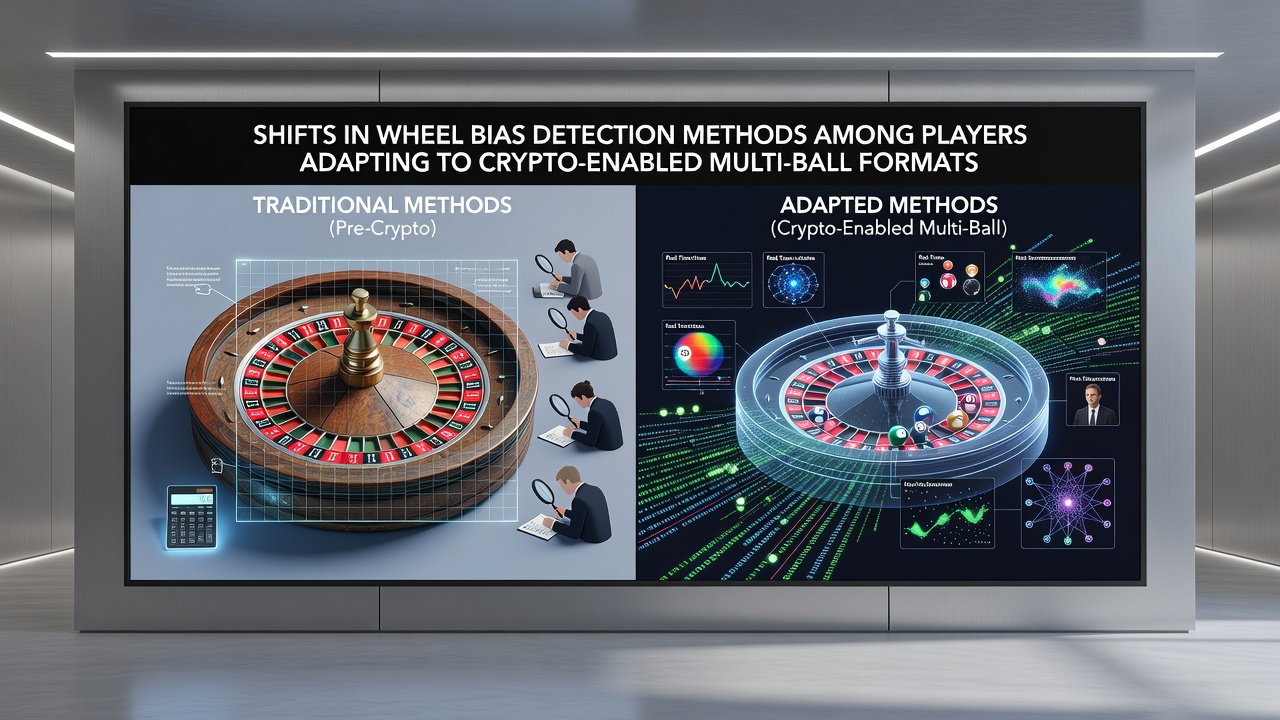
Yet the same volume of data also introduces noise from ball-to-ball interactions, so analysts developed filtering techniques that isolate each ball's contribution before aggregating results. Evidence from European gaming associations demonstrates that players who applied these segmented models detected wheel biases at rates comparable to older single-ball methods, even though the underlying hardware operated under continuous multi-ball stress.
Tools and Resources Emerging Players Utilize
Specialized applications now integrate ledger queries with probability simulators, allowing users to flag deviations across multiple ball streams without manual calculation. Industry trade groups report that training modules for these tools emphasize the need to distinguish between RNG-generated sequences and any mechanical launch irregularities that persist despite cryptographic oversight. Observers note that communities sharing anonymized datasets have accelerated collective understanding of how bias signatures change when sites introduce variable ball counts or altered release mechanisms.
Regulatory Context and Industry Response
Authorities in multiple jurisdictions have begun requiring operators to disclose multi-ball configuration parameters alongside standard fairness certifications, creating a framework where bias detection can reference both cryptographic proofs and physical audit results. Australian regulatory summaries from mid-2026 highlight that sites adopting these standards experienced fewer player disputes related to outcome predictability. The integration of such disclosures supports ongoing refinement of detection methods that remain effective even as game formats continue to diversify.
Conclusion
Wheel bias detection continues to adapt through statistical segmentation, cryptographic verification, and multi-source data aggregation as players navigate crypto-enabled multi-ball formats at emerging sites. Research indicates these combined techniques maintain detection reliability despite increased complexity, while regulatory developments in regions such as North America and Australia provide structured data that further supports method refinement. The patterns documented through 2026 suggest ongoing evolution in how bias identification integrates with new technological and operational realities.